ServicesFurnace Installation
Furnace Installation in Cheney
We remove your old furnace, set a new one sized for your home, and test the gas line, venting and carbon monoxide levels before we call it done. You get a written quote first, and the estimate is free.
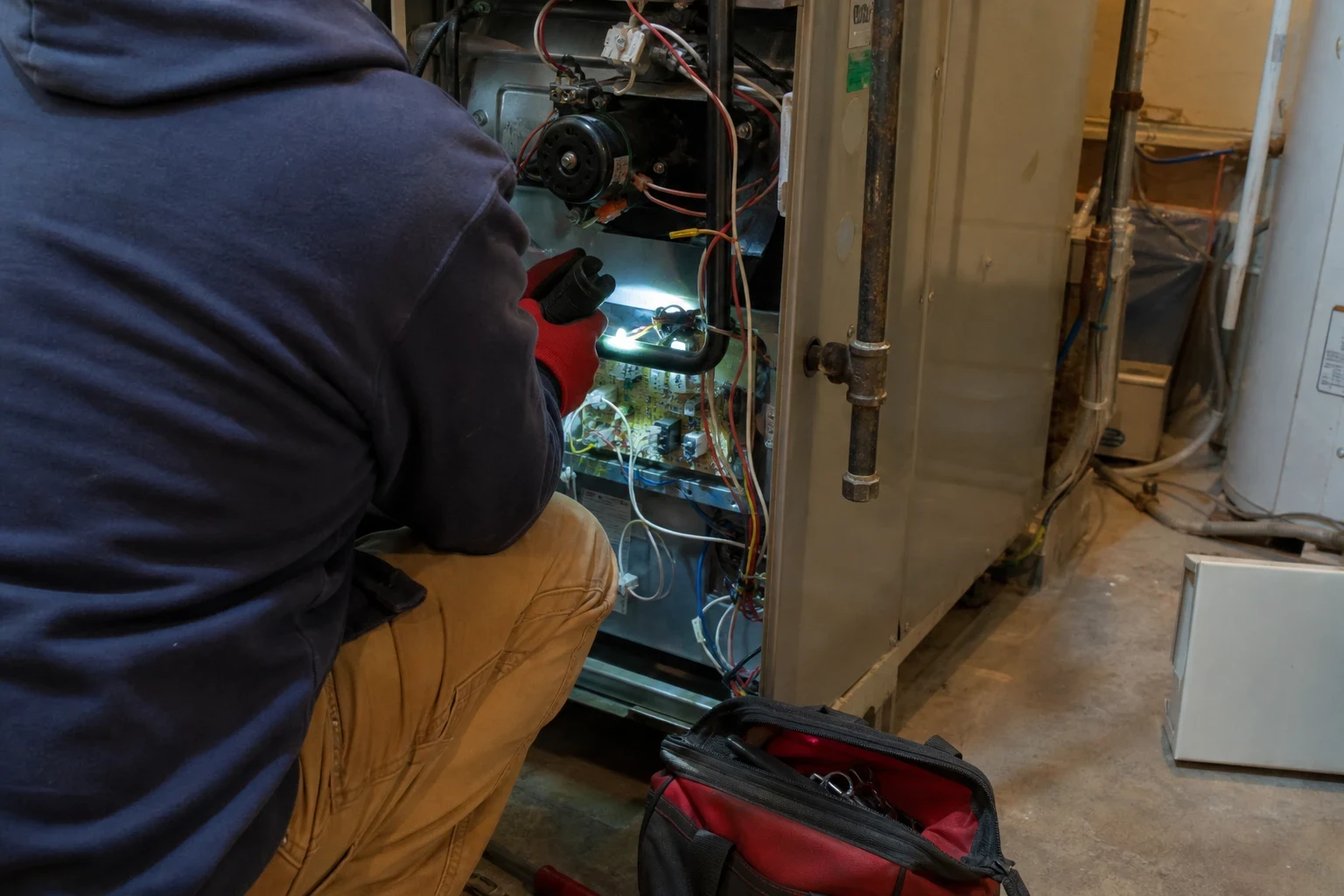
A new furnace, put in the safe way
A furnace burns gas a few feet from where your family sleeps. That is why we treat installation as safety work first. The unit has to be the right size, the flue has to carry exhaust out, and every gas joint has to hold pressure.
Most of our installs replace a furnace that is worn out or no longer safe to run. Some are upgrades from an old 80% unit to a high-efficiency model that vents through PVC pipe. Either way, we explain the options in plain words and let you pick.
If your furnace can still be fixed for a fair price, we will tell you. Our furnace repair page covers that side of things.
What the install includes
- Sizing for your home
- We account for square footage, windows, insulation and how well the house keeps its heat. An oversized furnace short-cycles and fails early. An undersized one runs nonstop in January.
- Removing the old unit
- We turn off the gas and power, disconnect your old furnace and take it with us. Nothing is left behind in your garage or yard.
- Gas line and shutoff
- We hook up the new furnace with a proper shutoff valve and sediment trap, then pressure test and soap test each joint we worked on.
- Venting and condensate
- High-efficiency furnaces vent through PVC and produce water. We route the vent so exhaust clears the house safely and run the condensate drain so it won't freeze or back up.
- Thermostat and startup
- We hook up the thermostat, light the furnace and watch it run through complete heating cycles.
- Combustion and CO testing
- We test the burner flame, gas pressure and carbon monoxide at the furnace and in your living space, and make sure your CO alarms work.
Signs it may be time for a new furnace
A cracked heat exchanger
A crack can leak combustion gases into your indoor air. On an older furnace, that usually calls for a new unit rather than a fix.
Repair bills keep stacking up
When you've paid for several repairs over a couple of winters, that money may do more toward a new furnace.
Age past 15 to 20 years
Parts get scarce and efficiency falls off. Older furnaces also lack the safety controls built into newer ones.
Yellow flame or soot
A sound burner flame burns mostly blue. A yellow flame or soot near the unit means combustion is off. Turn it off and have it looked at.
Rooms that never warm up
If rooms stay cold on the coldest nights even after repairs, the furnace may be too small or wearing out.
What moves the price
Every home is different, so we quote after we see it. The quote is written and lists each part of the job. Estimates are free on installations and replacements.
Furnace size and efficiency
Bigger output and higher efficiency ratings cost more up front. A high-efficiency unit can lower your gas bill over the cold months.
Venting changes
Going from an older metal flue to PVC venting adds labor and material. So does relining a chimney that the old furnace shared.
Gas line work
If the gas line needs a new shutoff, a longer run or a size change, that is added to the quote.
Access to the space
A tight crawlspace or attic install takes more time than an open basement or garage.
Permits and add-ons
Permit fees, a new thermostat or extra CO alarms are listed separately so you can see them.
How install day goes
- 1
Free look at your setup
We come out and check the old furnace, the gas supply, the flue and the space around it. Then you get the price on paper, line by line. Nothing starts until you have read it and said yes.
- 2
Paperwork and a date
We file the mechanical permit with the building department. Then we pick an install day that fits your week. Most swaps are finished in one day.
- 3
Protect, remove and set
We lay down floor covers on the path to the furnace. Then we shut off gas and power, take out the old unit and set the new one level.
- 4
Test before we leave
We pressure test the gas line, check the vent draft and measure carbon monoxide. We show you the filter, the shutoff and the thermostat.
- 5
Inspection
The local inspector checks the work. We handle any follow-up so the permit closes clean.
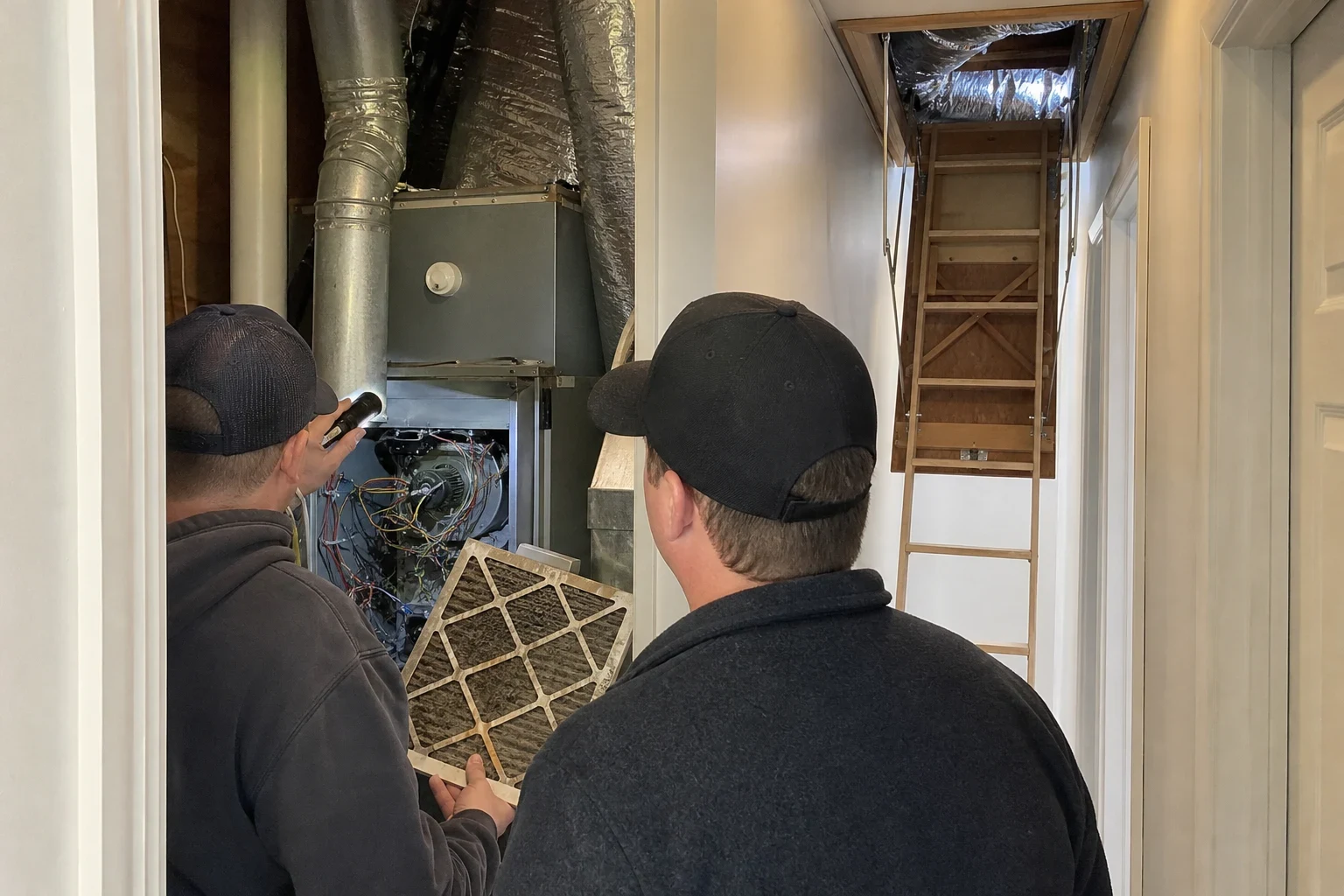
Furnace installation questions
How long does a furnace install take?
A simple replacement usually takes a day. Changing the venting or moving the furnace to a new spot can take longer. We give you a timeline along with the quote.
Will I be without heat for long?
Typically only while we're working. In the dead of winter we aim to have the new furnace heating by evening. If the old one quits before install day, our emergency HVAC repair runs 24/7.
Do you handle the permit?
Yes. We apply for the mechanical permit and set up the inspection, so someone else double-checks the gas and venting work.
Should I get a heat pump instead?
That comes down to your home and your gas service. Some houses work well with a heat pump backed by a gas furnace for the coldest nights. We can go over both with you, and our Heat Pumps page explains that option.
Do I need carbon monoxide alarms?
Yes, every home with a gas furnace needs them. We test yours at startup and tell you if one is missing or not working.
Ready for a safer, warmer winter
We come out, look at your setup and give you a written quote. The estimate is free, and you decide with no pressure.