ServicesDuctless Mini-Splits
Ductless Mini-Split Heating and Cooling in Cheney
No ducts? A mini-split still brings heat and cooling to the room. We match the unit to the space, give it a circuit of its own, pressure test every line and seal each opening we cut. The result is even comfort from equipment you can trust in your home.
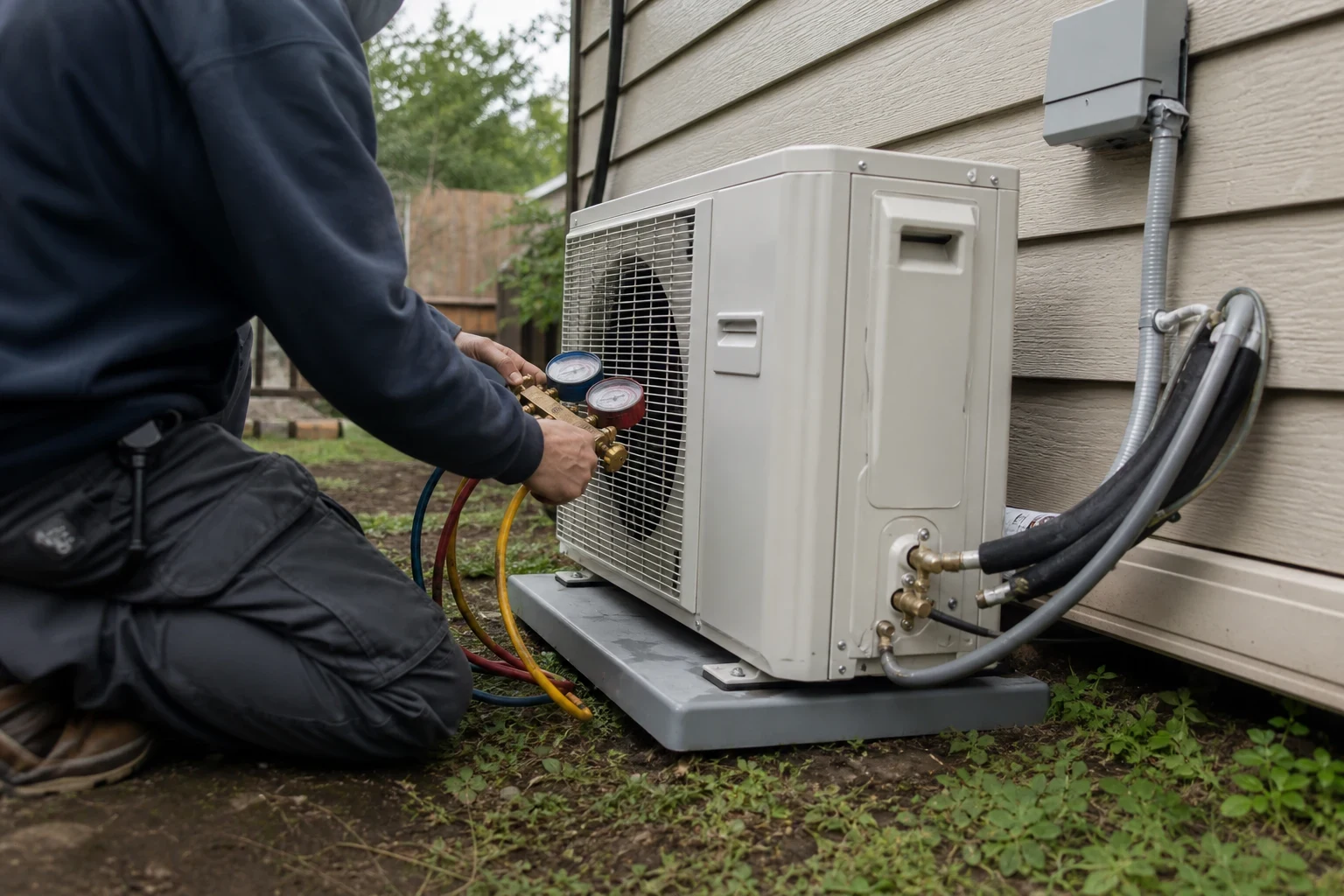
How a Mini-Split Works and Where It Fits
There are two pieces to a ductless system: a unit outside and one or more heads on your inside walls. A thin bundle of copper tubing, power cable and drain line connects them through an opening roughly three inches wide. Every head has its own control, so one bedroom can stay warm while the rest of the house stays cooler.
It shines in rooms the main system never reaches well: a garage turned living space, a bonus room above the garage, a finished lower floor or a new wing. Houses warmed only by baseboards or wall heaters, with no ducts at all, are a natural match too. Because it is a heat pump, the same unit cools in July and heats in January.
When mini-splits fail, the cause is usually how they were put in, not the unit itself. A flare joint left loose lets refrigerant escape. Wire that is too small heats up. A drain pitched the wrong way leaks inside the wall. We take the time on each of those steps because they are what keep your household safe.
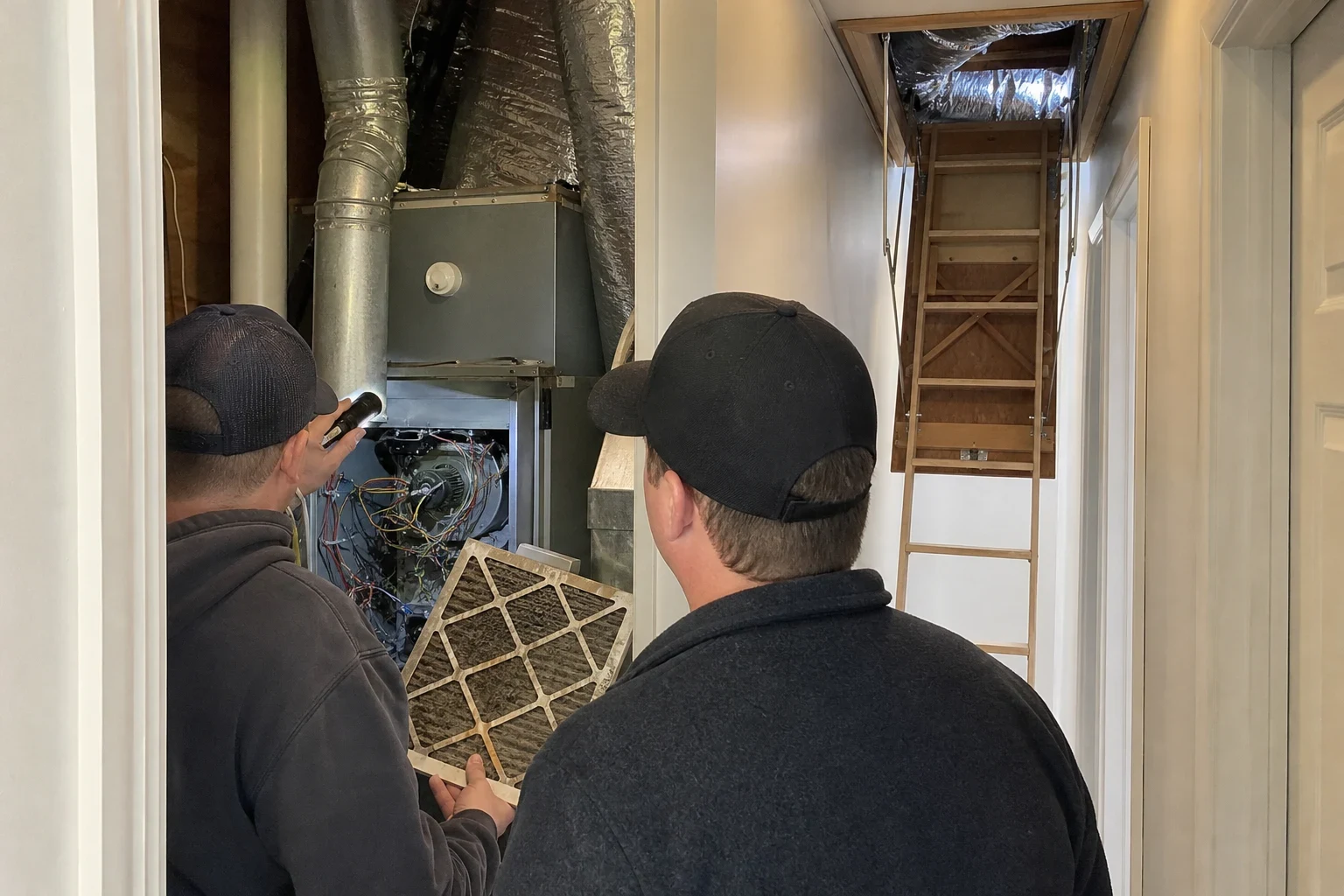
Every Mini-Split Install Comes With
- 01
A sizing check room by room
We measure the space and note its windows, insulation and sun exposure to pick the right head. An oversized one turns on and off constantly; an undersized one never shuts off during a cold spell.
- 02
A circuit just for the unit
The outdoor unit gets a breaker of its own, wire of the proper gauge and a disconnect where the unit can be seen. Whoever services it later can cut the power on the spot.
- 03
Nitrogen test and full evacuation
We fill the lines with nitrogen and watch the gauge for any drop before releasing refrigerant. Next we pull a vacuum to remove air and moisture. Leaving this step out is the top reason these systems die young.
- 04
Flare joints torqued to spec
We tighten each flare with a torque wrench to the manufacturer's number instead of guessing by hand. Newer refrigerants call for careful handling, and a correct joint keeps them sealed in.
- 05
Outdoor unit up high, wall sealed tight
A stand or wall bracket holds the outdoor unit above drifting snow and lets defrost water run off. We seal the wall opening on both sides and cover the exterior lines.
- 06
Cleanup and a quick lesson
We go over the remote and show you how to pull and rinse the filters. Dust from drilling and all the packaging leave with us.
Questions about Ductless Mini-Splits?
Call(509) 309-8324When a Mini-Split May Be the Answer
One room stays chilly all winter
When a single room runs several degrees behind the rest of the house, putting a head there solves it and leaves your main system alone.
Plug-in heaters on extension cords
A portable heater running beside a bed, drapes or a worn outlet can start a fire. A head on the wall delivers steady warmth with no cords across the floor.
Window units going in each summer
A window unit blocks daylight, leaks drafts and can drop out if it isn't fastened well. A mini-split cools quietly and leaves the window clear.
A house or addition with no ducts
Many older homes with baseboard or wall heat, and many additions, can't connect to central air. That is the exact job ductless systems were made for.
Big power bills from baseboards
Electric resistance heat is basic but expensive to run. A heat pump moves heat rather than creating it, so the same warmth takes much less electricity.
How a Mini-Split Install Goes
- 1
Phone call and free quote
Call us and tell us about the rooms. We set a visit, look at the space and the electrical panel, and give you a written quote before any work begins.
- 2
Planning head and unit locations
We pick spots with you. Heads go where air can reach the whole room, and the outdoor unit goes where it is clear of roof drip, walkways and snow piles.
- 3
Install day
We lay drop cloths, mount the heads, drill and seal the wall openings and set the outdoor unit. Power to the panel is shut off while the circuit is added. A single-zone job usually takes one day; multi-zone takes longer.
- 4
Test, charge and start up
We pressure test, vacuum, release the refrigerant and check temperatures and amp draw on every head. Then we run it in heat and cool so you can see it work.
What Sets the Cost of a Mini-Split
Every home prices out differently, so we quote once we have seen yours. Installation and replacement estimates are free, and the number comes to you in writing before work starts. Mini-splits are heat pumps, so ask about the Avista rebates and federal tax credits you may qualify for. We can help you claim them.
- How many rooms
- A single head on a single outdoor unit is the most basic setup. Every extra room adds a head, more tubing and more labor.
- Rated for cold weather
- Models built to keep heating far below zero cost more at the start. In a home that depends on them for real winter heat, they usually pay off.
- Room in your panel
- When the panel has space for another breaker, the wiring is straightforward. A crowded or aging panel may need work before the system goes in.
- Run length and wall material
- Long line runs, heads on a second floor and brick or concrete walls take more time and parts than a short path through wood framing.
Common Questions About Mini-Splits
Can a mini-split handle a hard freeze?
Cold-climate units keep putting out heat well under freezing. We size them for winter, not only summer. Some homes hold on to their current heat as a backup for the harshest stretches, and we will tell you honestly if yours is one of them.
How large an opening goes in the wall?
Typically around three inches wide. We seal both sides against air, water and insects, and the outside lines get a protective cover.
Is the newer refrigerant safe to have in the house?
It is, as long as the install is done properly. A few newer refrigerants are slightly flammable, so we pressure test with nitrogen and torque each joint to spec. A sealed system keeps the refrigerant inside the copper lines.
What upkeep does a mini-split need?
Rinse the indoor filters every month or two. Have the coils and drain cleaned yearly to stop mold and clogs from forming. That annual visit is part of our maintenance plans.
Will one outdoor unit serve more than one room?
It can. A multi-zone outdoor unit runs anywhere from two to several heads, and each one has its own control. In some homes two single-zone systems are the better setup, and we will explain which suits your rooms.
Ready to Fix That Hard-to-Heat Room
Tell us which rooms give you trouble. We will come out, look at the space and the panel, and give you a written quote with no pressure.