ServicesAC Repair
AC Repair in Cheney
When your air conditioner quits, we track down the real cause and fix it safely. We shut the power off at the disconnect before touching anything. Nothing gets started until you have our price in writing, and a call at night or on a weekend costs you nothing extra.
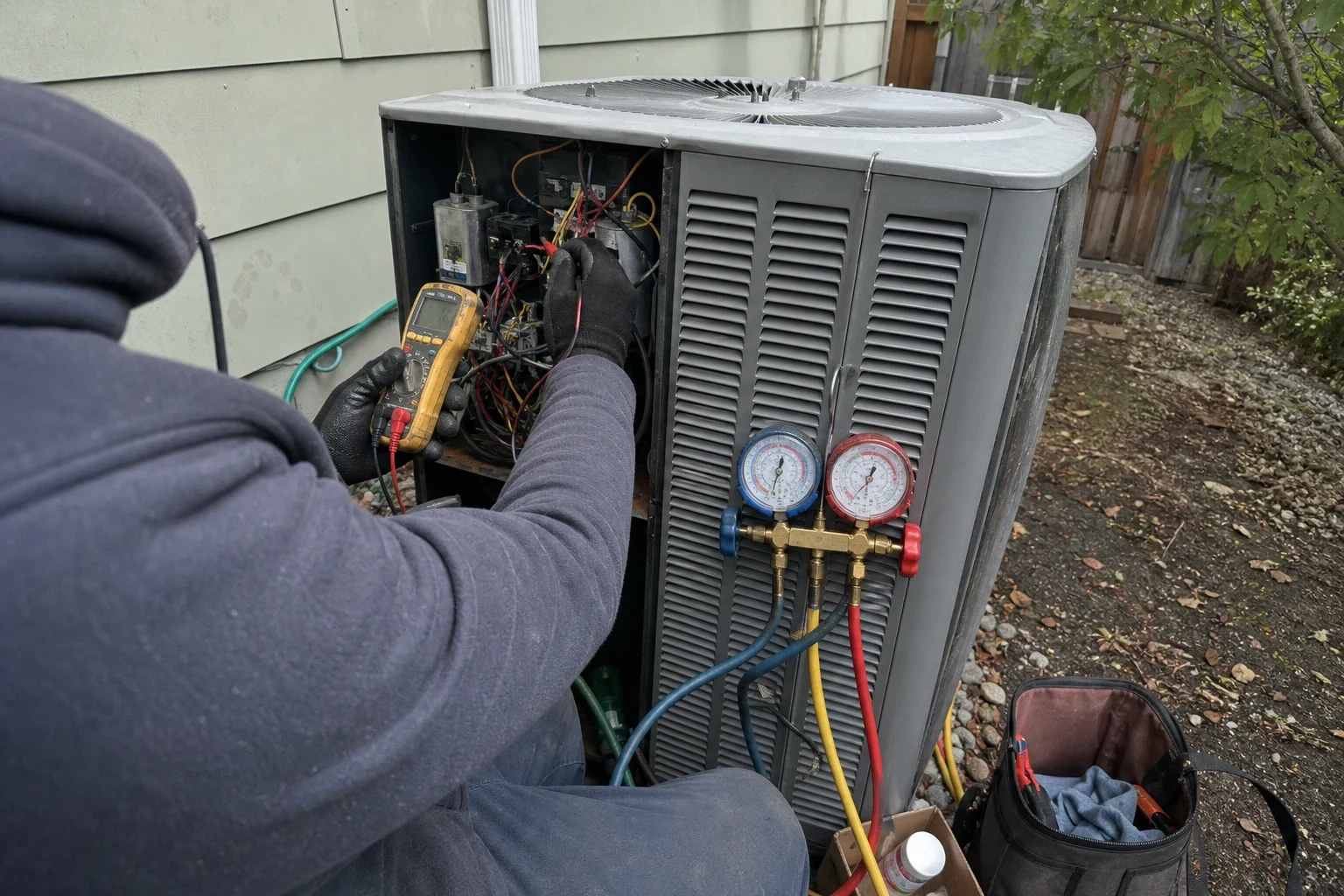
Getting your home cool again, the safe way
An air conditioner is high voltage, stored electrical charge and refrigerant under pressure. Most failures come down to a few parts: a weak capacitor, a worn contactor, a clogged coil, a refrigerant leak or a tired fan motor. We test each one in order so we fix the part that failed, not the one that is easiest to sell.
Repair is the right call when the system is sound and one part has given out. If the compressor is gone on an older unit, we will tell you plainly and lay out repair next to AC installation so you can decide. No pressure either way.
If it breaks down in the middle of a summer heat spell, we answer 24/7.
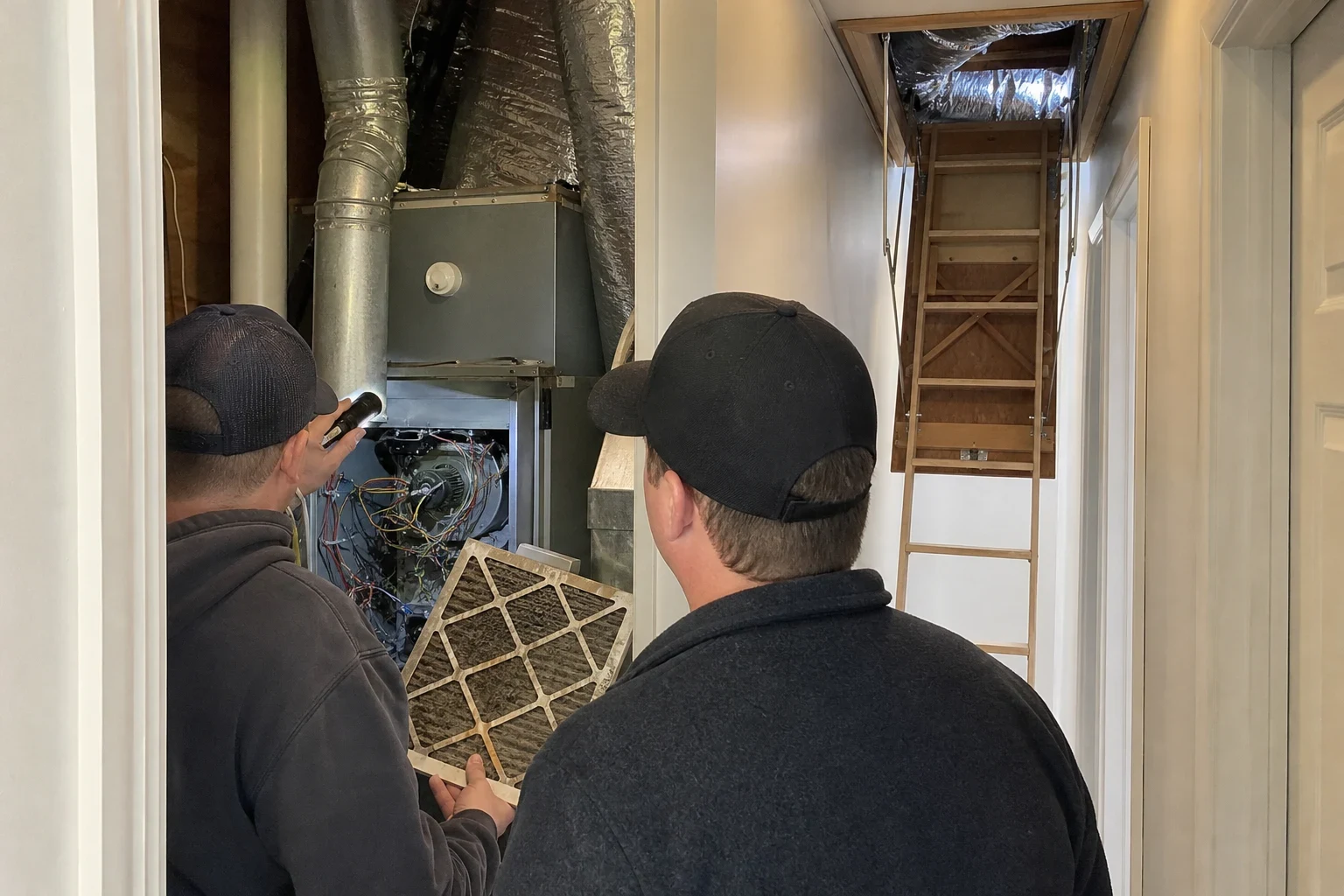
What an AC repair visit covers
- 01
Power locked off first
We kill power at the outdoor disconnect and the panel, then confirm it is dead with a meter. Capacitors hold a charge even with the power off, so we discharge them before handling.
- 02
Electrical testing
We check capacitors, contactors, wiring and connections. Burnt or loose wires are a fire risk, and we point them out even when they are not why you called.
- 03
Refrigerant check and leak search
We read system pressures and look for oily spots at joints and coils. If refrigerant is low, there is a leak. We find it before recharging, because topping off a leak just puts you back where you started.
- 04
Coils, drain and airflow
Dirty condenser coils and a clogged condensate drain cause a lot of breakdowns. We clean what needs it and make sure water drains away from your home, not into it.
- 05
Final run test
After the repair we run the system and measure the air temperature at the supply and return. You see it cooling before we pack up.
Questions about AC Repair?
Call(509) 309-8324Signs your AC needs repair
Air moves, but it isn't cold
The vents are blowing, yet the air coming out feels about the same as the room. A dead capacitor, a low charge or a condenser that never starts are the usual suspects.
Condenser buzzes, fan sits still
If the unit outside makes a steady buzz while the fan blade doesn't turn, the start capacitor or the fan motor is often to blame. Switch cooling off at the thermostat so the compressor isn't straining against a part that can't help it.
White crust on the refrigerant pipe
A coating of ice on the larger copper pipe outside, or on the coil inside, points to weak airflow or a low charge. Turn cooling off and give it a few hours to melt so we can test the system properly when we get there.
Burning smell or tripped breaker
A breaker that keeps tripping or a hot electrical smell is a safety issue. Leave the breaker off and call us.
Water around the indoor unit
A clogged drain line or cracked pan can soak flooring and drywall. Catching it early keeps a small fix from becoming a water damage problem.
Short cycling
The system turns on and off every few minutes. That wears out parts fast and usually traces back to a sensor, a charge problem or an oversized unit.
What Happens on Repair Day
- 1
Call and describe the problem
Let us know what the AC is doing. We point you to a couple of safe checks, such as the filter and the breaker, then book a time to come out.
- 2
Power off, then testing
We lock the power out, test the electrical components and read the refrigerant pressures. Then we show you the problem, with pictures when the part is tucked out of sight.
- 3
Written price before parts
No part gets replaced until you have the cost on paper. Say yes to the repair and the diagnostic charge is taken off your bill.
- 4
Fix, check and tidy up
We swap the bad part, run the AC and make sure cool air is coming out. The old parts and boxes go with us.
What Sets the Price of an AC Repair
The bill mostly depends on which part gave out and how long it takes to get to it. Replacing a capacitor is quick. Fixing a leak or a compressor problem is a far larger job. Either way, the price is in writing before work begins.
- The broken part
- Capacitors and contactors are small parts we replace often. Fan motors, coils and compressors cost more and take more time.
- Kind and amount of refrigerant
- Some older units use refrigerant that is harder to come by. How much it takes depends on the system's size and how badly it leaked.
- Tracking down the leak
- Certain leaks are obvious. Others take extra testing to pin down before recharging is worth doing.
- Where the equipment sits
- A coil wedged into a cramped attic or crawlspace takes longer to reach than one in an open basement.
Questions About AC Repair
My AC is making an odd noise. Can I keep it running?
Best not to. Grinding, squealing or a loud buzz usually means a motor or electrical part is on its way out, and running it anyway can turn a cheap fix into an expensive one. Turn it off at the thermostat and give us a call.
Will you just top off the refrigerant?
Only after we look for the leak. Refrigerant doesn't wear out, so a low level means it is escaping somewhere. Recharging without a fix only lasts a few weeks.
Is a night or weekend visit more expensive?
It isn't. We charge no emergency or after-hours fees, and our phone is answered 24/7 if the AC gives out on a hot night.
How can I tell I'm not being sold more than I need?
You see the bad part, or a photo of it, and we explain its job. A written quote comes before any work, and when an older unit isn't worth repairing, we tell you.
Is it smarter to repair my old AC or replace it?
When the system is in good shape and a single part broke, fixing it usually costs less. When the compressor has failed or repairs keep coming, we put it side by side with AC installation or a heat pump so you can choose.
What can I do to prevent another breakdown?
An annual tune-up finds weak capacitors, dirty coils and blocked drains before they fail. Our maintenance plans come with tune-ups, discounts on repairs and priority scheduling.
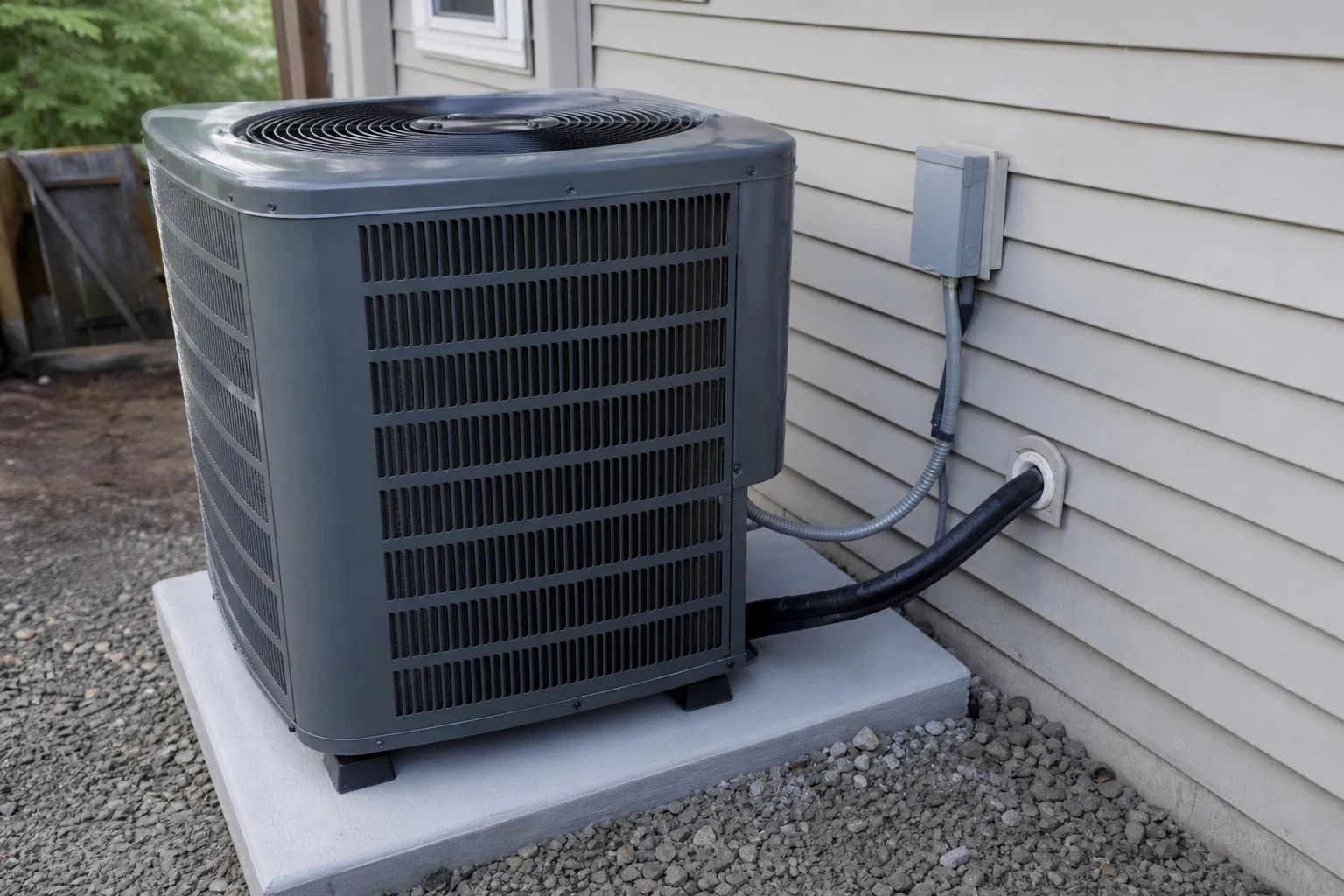
Let's find out why your AC stopped cooling
Tell us what your system is doing and we'll walk you through the next step. Repairs start with the power off and a written quote in your hands.